Advanced Vineyard Management: Precision Technologies and Sustainable Solutions
- research
- study
- third mission
Site-Specific Vineyard Management Using Remote Sensing and Variable Rate Techniques
Speaker Marco Sozzi, University of Padua
Abstract
How can the spatial and temporal variability present in our vineyards be managed? This seminar will explore the principles and applications of site-specific vineyard management, integrating remote sensing technologies and variable rate techniques. The main tools for monitoring within-field variability will be examined, including satellite imagery, drones, and proximal sensors. The role of field-collected data will be discussed, and how it can support targeted agronomic decisions, optimizing interventions such as fertilization and plant protection. The goal is to provide an operational framework to improve production efficiency, grape quality, and the environmental sustainability of vineyards.
The Light That Suppresses Pathogens: UV-C in Viticulture
Speaker Valeria De Rosa, University of Trento
Abstract
The vineyard area in the European Union accounts for only 4% of the land dedicated to agriculture, yet viticulture is responsible for 60% of total fungicide use. This raises concerns for human and environmental health, highlighting the need for effective strategies to reduce their use. UV-C radiation negatively affects the viability of microorganisms and has been successfully applied in various plant–pathogen systems; however, transferring this technology to woody crops remains a relatively unexplored frontier.
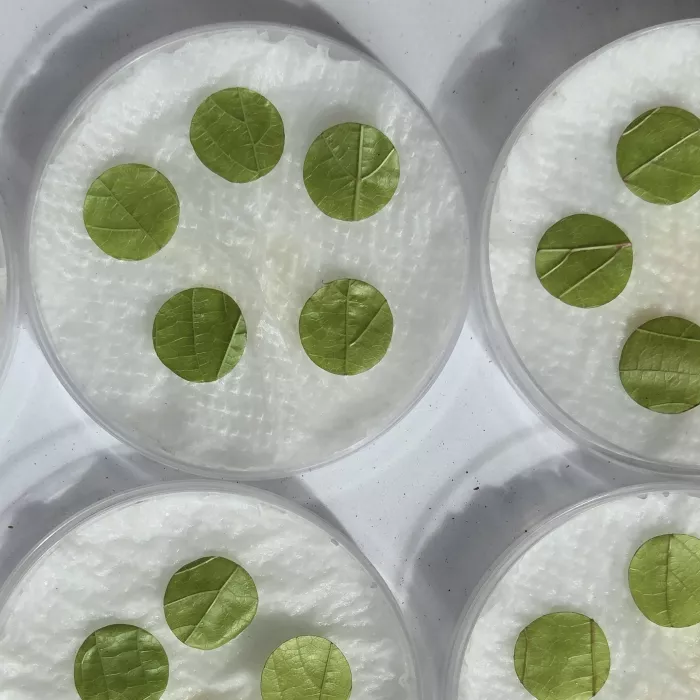
In our work, we apply UV-C radiation to grapevines under controlled conditions, demonstrating its ability to effectively contain downy mildew infections (*Plasmopara viticola*) while simultaneously inducing the production of secondary metabolites considered markers of resistance to this pathogen. Starting from the 2026 growing season, the autonomous rover Icaro X4 will be deployed for four consecutive years to optimize the transfer of this technology to vineyard conditions; preliminary findings are discussed.
Co-funded by the European Union. Views and opinions expressed are however, those of the author(s) only and do not necessarily reflect those of the European Union or CINEA. Neither the European Union nor the granting authority can be held responsible for them
In collaborazione con