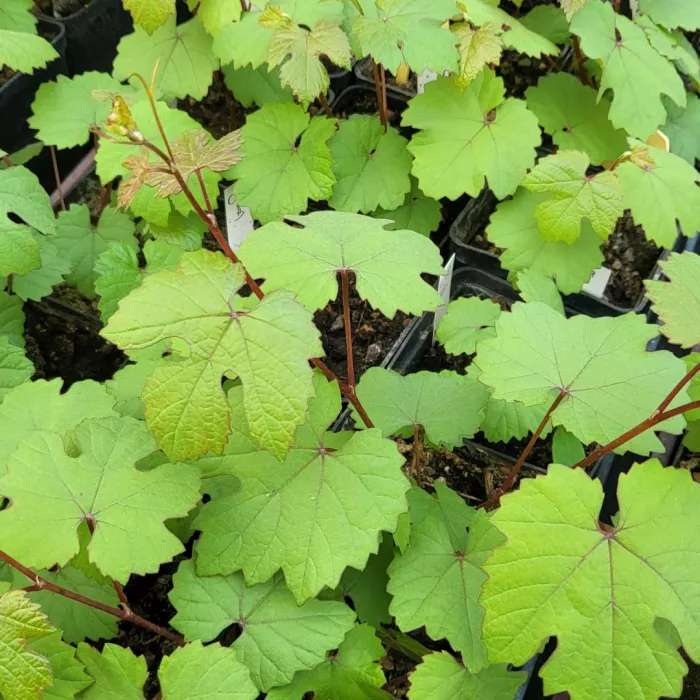
Harnessing tailored microbial consortia for sustainable and resilient grapevine cultivation
- ricerca
- studiare
Abstract
Besides plant genotype, environmental factors such as nutrient and water availability, together with the plant’s
ability to efficiently exploit soil resources, strongly influence plant growth and productivity. Soil and crop
microbiota diversity play a key role in addressing environmental challenges, improving yields, and maintaining
soil health. Current research on grapevine focuses on identifying plant traits involved in interactions with soil
microorganisms, evaluating how environmental and soil conditions shape these interactions, and promoting
knowledge on the use of root-associated microbes and traits that contribute to crop resilience to environmental
stresses. This work aims to generate new insights into root traits linked to resource-use efficiency and stress
tolerance, including the capacity to recruit beneficial soil microorganisms.
The speaker
Dr Raffaella Balestrini is a Biologist, PhD in Fungal Biology and Biotechnology. With CNR since 1998, Raffaella is
currently Research Director and Director at CNR-IBBR. She has expertise on studies aimed to highlight the
cellular and molecular bases of plant-soil microorganism interactions, mainly focusing on cell wall changes and
nutritional exchanges. She mainly contributed to elucidate different aspects related to the interface creation in
mycorrhizal symbioses and she contributed to obtain new knowledge on the cell-specificity in arbuscular
mycorrhizal (AM) roots. Thanks to the participation at diverse international consortia, she has contributed to
highlight the genome features of different mycorrhizal fungi. Current research interests mainly address crop
responses to environmental stresses and the role of root plasticity and root-associated microorganisms (e.g.,
mycorrhizal fungi) in improving tolerance. This is achieved by an integrative approach including, including -omics
approaches (mainly transcriptomics) and root phenotyping.