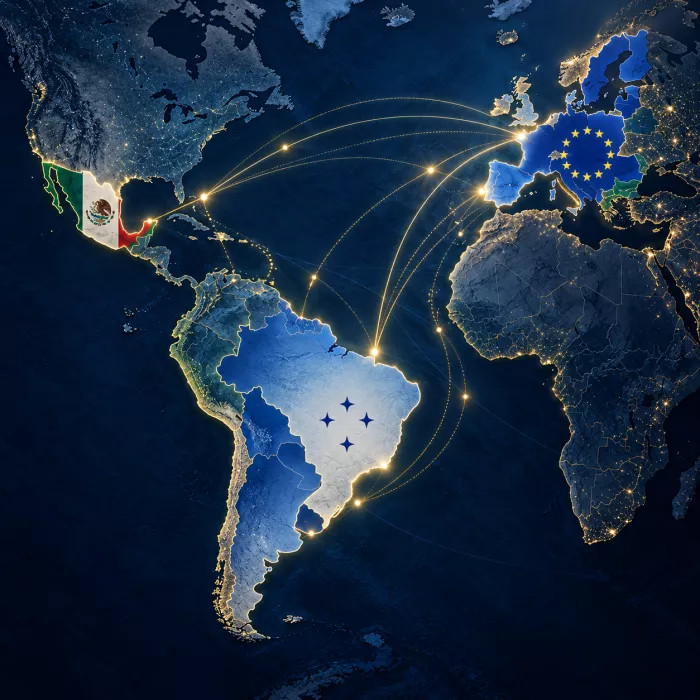
EU-LAC Relations today: a geopolitical turn?
Throughout the academic year, the School of International Studies organizes Guest Lectures delivered by internationally renowned visiting professors and scholars, offering students the opportunity to explore key global issues and engage with cutting-edge academic research.
- study
In 2026, the EU signed long-overdue Association Agreements with two key Latin American partners, Mercosur and Mexico. With this move, the EU now has Economic Partnerships in operation with most of Latin America and the Caribbean. To what extent is this due to the EU’s geopolitical turn? While these agreements are part of a three-decade-old EU strategy toward Latin America, the timing of their conclusion reflects an intention to address pressing geopolitical challenges and to send a powerful political signal in defense of a rules-based economic international order.
Bio: Lorena Ruano is a Mexican scholar of Spanish origin. She was Professor of International Relations at the Centro de Investigación y Docencia Económicas (CIDE) in Mexico City between 2002 and 2025, after which she joined the Department of International Relations and Global History at Universidad Complutense de Madrid. Her research and teaching have focused on European integration and relations between Europe and Latin America, with numerous national and international publications. Her latest publication is: Lorena Ruano with the colaboration of Mauricio Polin (2025), "Maximizing Opportunities for Sustainable Investments and Fair Trade in the European Union–Latin America and the Caribbean Strategic Partnership" , Discussion Document, Hamburg: EU-LAC Foundation.