Understanding and Managing Smoke-Tainted Wines: Mechanisms, Markers, and Mitigation Strategies
- ricerca
- studiare
- terza missione
Department of Food Science and Technology – Oregon State University
Wiegand Hall - Corvallis, Oregon - USA
Abstract
Wildfire events have increasingly impacted wine regions worldwide, elevating concern over smoke exposure and its consequences for grape and wine quality. Research led by Dr. Elizabeth Tomasino has significantly advanced the understanding of how smoke-derived compounds interact with grapes, ultimately influencing sensory perception in wine. Smoke exposure introduces volatile phenols—such as guaiacol and cresols—which are absorbed by grape tissues and subsequently metabolized into glycosylated (bound) forms. While these bound compounds are initially odorless, they can be hydrolyzed during fermentation, aging, or even in the mouth, releasing volatile phenols that impart undesirable smoky, ashy, and medicinal characteristics.
A central challenge to understanding and mitigating smoke impacts in wine is the variability between chemical measurements and sensory outcomes, underscoring the importance of robust and reliable markers for predicting smoke taint. Traditional markers such as free volatile phenols alone are insufficient; instead, a combination of free and bound phenolic compounds, paired with sensory analysis, is necessary to accurately assess risk. Different grape varieties and exposure conditions complicate prediction, highlighting the need for improved analytical frameworks.
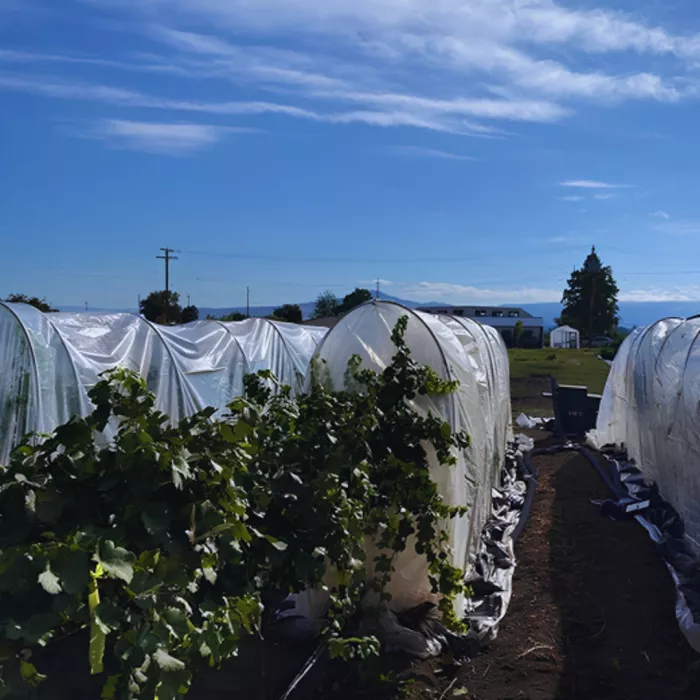
Mitigation strategies span both vineyard and winery interventions. In the vineyard, reducing fruit exposure and careful harvest timing can limit uptake. At the winery level, approaches including selective harvesting, gentle processing to reduce skin contact, and the application of adsorptive treatments (e.g., activated carbon) have demonstrated partial success. However, research shows that many mitigation efforts can inadvertently strip desirable aroma compounds, creating trade-offs between removing smoke taint and preserving wine quality.
Overall, managing smoke impacts requires an integrated approach combining chemistry, sensory science, and practical winemaking decisions. Continued research into reliable markers and targeted mitigation techniques remains critical as wildfire prevalence increases globally.
The speakers
Prof. Elizabeth Tomasino is a Professor of Oenology at Oregon State University and a core member of the Oregon Wine Research Institute. Elizabeth’s Ph.D. in Oenology was earned from Lincoln University in New Zealand and incorporated components of microbiology, winemaking, sensory science, chemistry, and food science. A Wine Enthusiast’s 2022 Wine Star Awards winner, Tomasino was recognized as an “Innovator of the Year” for her research on grape smoke exposure and smoke taint in wine. She has been involved in research projects for E & J Gallo, Yalumba Winery, Robert Mondavi Winery, Giesen Wine Estates, and Pernod Ricard NZ. Her current research program is at the interface of wine chemistry and sensory. Of particular interest, she links chemical compounds to sensory perception, exploring the many interactions that occur. Tomasino has also developed predictive models for tropical fruit aromas in white wine and continues in her quest to unravel the many issues surrounding winemaking grapes impacted by smoke exposure and the prevalence of smoke taint in wine from smoke-impacted vintages. She is open to new ideas and collaborations and welcomes the chance to discuss and enjoy wine.
Camilla Sartori is a Faculty Research Assistant in Wine Sensory at Oregon State University and the Oregon Wine Research Institute. Originally from Trentino, Camilla earned her Master’s Degree in Food Science from the Free University of Bozen-Bolzano. In 2022, she completed wine sensory training at Fondazione Edmund Mach and interned with a local food company before joining Oregon State University. At Oregon State University, Camilla manages sensory research programs focused on wine aroma perception, descriptive analysis, and consumer sensory methods.