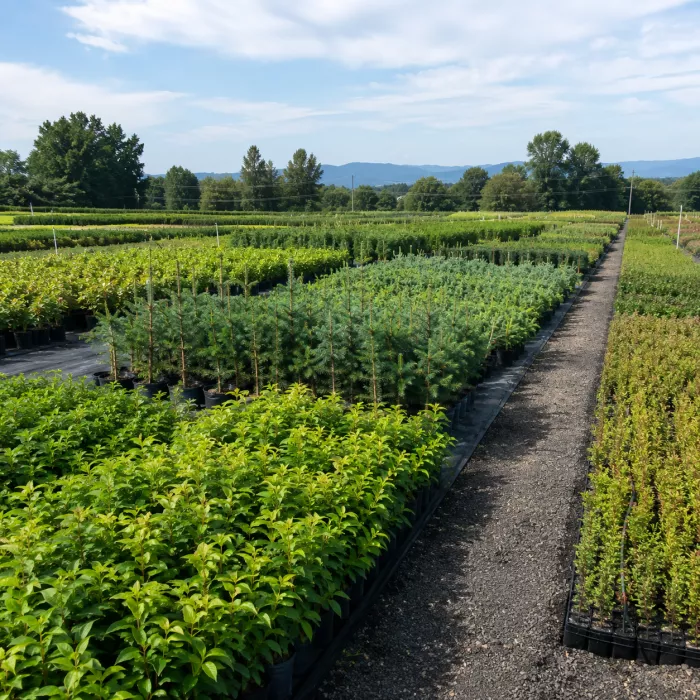
Understanding forest plant resilience: from experimental platforms to nursery validation
- ricerca
- studiare
- terza missione
Affiliation: Department of Biology & CESAM – Centre for Environmental and Marine Studies, University of Aveiro, Portugal
Abstract
Research on plant stress physiology in forest species, with particular emphasis on Pinus, provides a framework to understand how trees respond to environmental constraints and pathogens. Physiological, biochemical and molecular approaches will be discussed as tools to analyse pine responses to biotic and abiotic stress, particularly pine pitch canker, caused by Fusarium circinatum.
Special attention will be given to the Pinus–Fusarium experimental platform, used to compare differences in susceptibility and resistance among pine species, identify mechanisms associated with plant defence and performance, and explore how this knowledge can support more sustainable approaches to forest plant protection and nursery production. These approaches include induced resistance, beneficial microorganisms, plant–microbe interactions and non-chemical strategies aimed at improving plant quality and resilience.
Overall, the aim is to connect fundamental knowledge on plant function and stress responses with applied challenges in forest production, while promoting dialogue with areas such as plant pathology, microbiology and sustainable plant protection
Speaker biography
Prof. Glória Pinto is an Assistant Professor at the University of Aveiro, Portugal, a researcher at CESAM – Centre for Environmental and Marine Studies, and International Mobility Coordinator at the Department of Biology. She coordinates and teaches several curricular units, including Plant Physiology, Plant Biotechnology and Functional Plant Biology. Her scientific path began in plant biotechnology and in vitro culture, including micropropagation and somatic embryogenesis, and later evolved towards plant stress physiology, particularly in forest species. Her research combines physiological, biochemical, molecular and omics approaches to understand plant responses to global change, including drought, heat, pathogens and beneficial microorganisms.
She has worked with several woody and forest species, including Pinus pinaster, P. radiata, P. pinea, Eucalyptus globulus, Castanea spp., Quercus suber, Arbutus unedo and Vitis vinifera. A current focus of her work is plant selection, induced resistance and priming to improve resilience and reduce chemical inputs, using elicitors, beneficial microorganisms and non-chemical approaches such as UV-C. Her work aims to translate fundamental knowledge into applied strategies for resilient forest production, improved plant quality and sustainable nursery management.